

About Integrated Pest Management
Successful Mosquito Control and IPM at a Zoological Theme Park View .PDF
My first experience with Integrated Pest Management (IPM) came at a time in the early 1980’s when I was becoming very disenchanted with the use of heavy duty pesticides. I had been working at Parrot Jungle as the assistant horticulturist for nearly a decade and being responsible for the application of pesticides, nematicides, and fungicides I was gradually becoming aware of the complex environmental issues that resulted from pesticide use. I had also begun to notice that insect infestations were almost always occurring in the same area on the same plants. Why weren’t these problems occurring in other locations that seemed equally appropriate? Why were certain species of plants always full of insects or mites in the nursery but never in the garden? I was beginning to have many questions to which I could not find the answers.
The park had recently hired a man who was a recent immigrant from Cuba. He had worked as a “Bananero” in Cuba; a worker on a banana plantation. He was one of those people one sees occasionally that even without a formal education they are a tremendous source of knowledge on the natural world. They are absolute empiricists. The most minute detail is noticed by them, a decision will be made, and course of action will be determined that will provide a positive horticultural result.
We had several stands of bananas that were constantly being sprayed for red spider mites; up to eight times a year in the same location. One day I noticed the “Bananero” had cut off all the lower leaves from each banana trunk to approximately 90°. I was very upset that he had cut off all of these lush, healthy looking green leaves. When I approached him, he explained that by cutting off those leaves there would be no more insect problems. There was no other choice but to accept the situation. I was not happy with what he had done. After a month or so it began to dawn on me that spider mites were specialists and their infestations invariably began on the oldest foliage of all the different species of plants with which I was familiar.
The “Bananero” eventually moved on to a different place in his new country but I was left with the beginning of very successful and constantly evolving IPM and Plant Health Care programs (PHC). The original article that I wrote based upon my spider mite/banana experience was published in 1991 in the Heliconia Society Bulletin.
Parrot Jungle eventually evolved to Parrot Jungle & Gardens and now to a brand new, built from scratch tropical theme park, Parrot Jungle Island (PJI). The IPM and PHC programs are also evolving to accommodate the new soil and climatic conditions (windy and less cold temperatures in the winter). Tropical Designs of Florida along with PJI are now members of the U.S. Environmental Protection Agency’s GreenScapes Alliance landscape program. This alliance is designed to help preserve natural resources and prevent waste and pollution by encouraging companies, government agencies, and other entities to make more holistic decisions regarding waste generation and disposal and the use of the land, water, pesticides, and energy. I have also written (and will be implementing) the 2005 strategic plan for Parrot Jungle Island's U.S. Environmental Protection Agency's program for the Pesticide Environmental Stewardship Program.
Photo Gallery
Click Photos to Enlarge
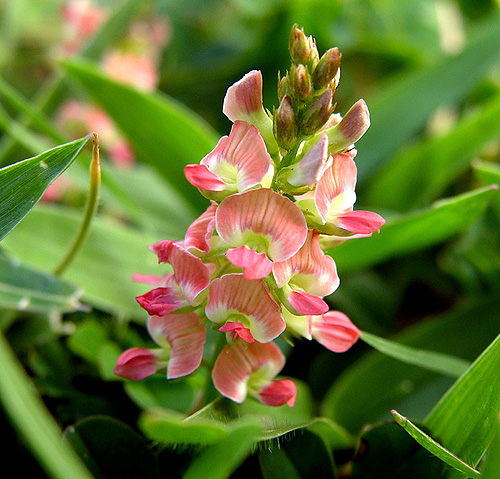
Creeping Indigo, Indigofera spicata
is a low growing tropical legume whose minute flowers are visited by a
variety of micro-lepidoptera (small butterflies) and tiny parasitic wasps.
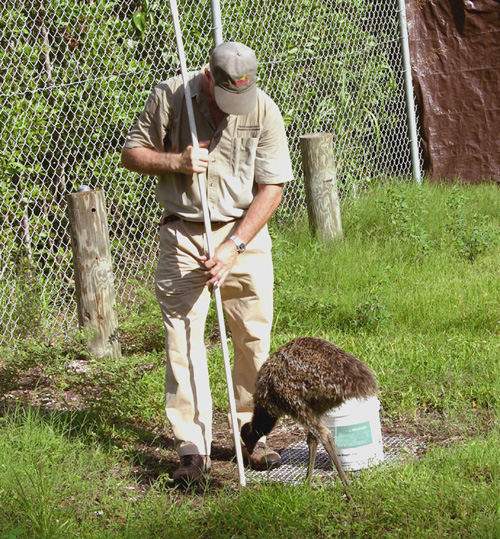 I am sampling a storm drain for mosquito larva with my assistant a young Emu. This is part of the successful mosquito larvae control program at Parrot Jungle Island.
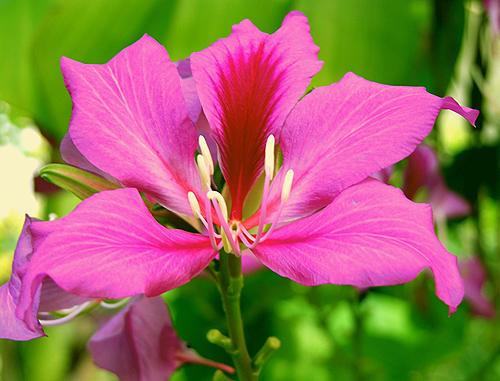 Bauhinia purpurea
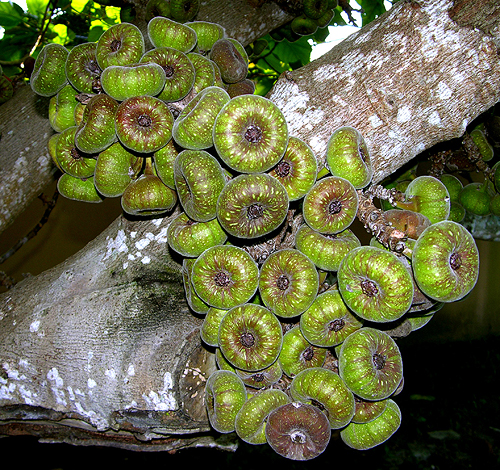 Ficus auriculata fruit
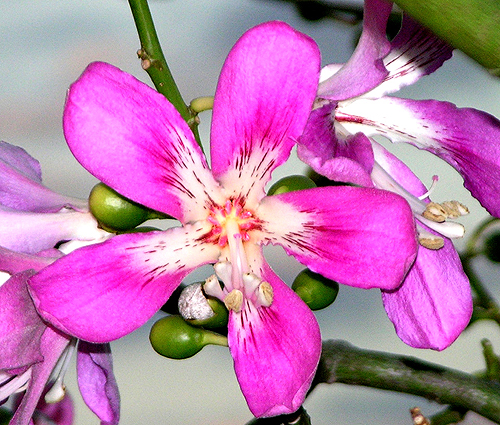 A flower of the tropical tree Ceiba speciosa formerly called Chorisia speciosa
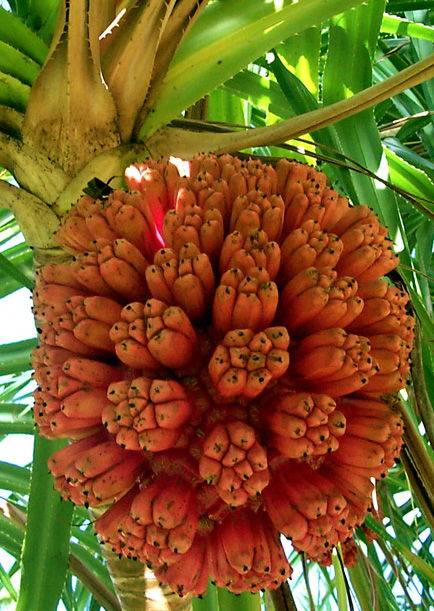 A ripe fruit of Pandanus fascicularis formerly called Pandanus odoratissimus
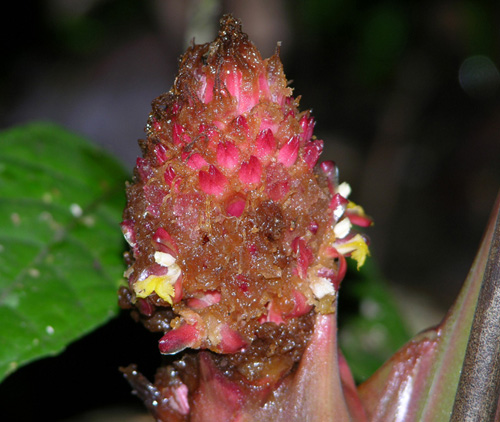 Plagiostachys species from Mulu National Park in Sarawak, Malaysia
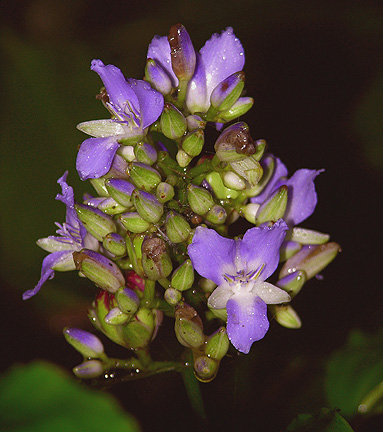 An inflorescence of Dichorisandra hexandra from the base of Volcan Mombacho in Nicaragua.
 About Integrated Pest Management
 An Experiment in Arboriculture and Mosquito Control
 German Cockroach Control through IPM
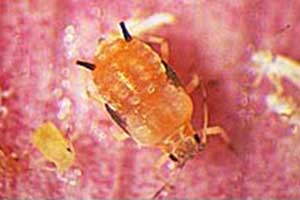 An IPM plan for the Control of Phtyophagous Mites on Musoid Plants
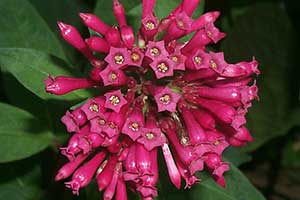 An IPM program for growing tropical plants using cultivation techniques
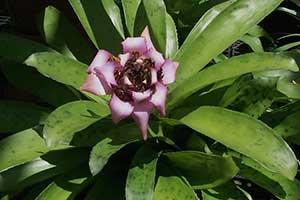 Practical IPM for the South Florida Homeowner