

Theme Parks, Zoo & Tropical Design
Click on the article titles below
About Theme Parks, Zoos & Tropical Design
The attendance of theme parks and zoos is a worldwide experience that millions of people seek every year. There may be an altruistic meaning behind the development of many facilities such as zoos and animal themed parks.
Read More >>
Integrated Pest Management in a Zoological Theme Park, Wing Beats the Journal of the American Mosquito Association
Effective mosquito control is critically important to reduce the transmission of debilitating human and animal diseases. For example, in zoo facilities, diseases such as avian malaria, West Nile virus, St Louis encephalitis virus, and many others may result in debilitating illness and even death.
Read More >>
The Environmental Lawn
To most people a lawn is an open area that surrounds a home, and is planted as a monoculture with a single species of grass. Often these lawns are maintained at great cost and with much effort.
Read More >>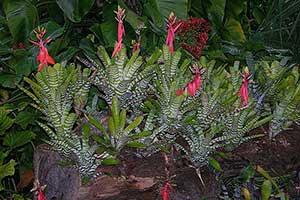
Design with Integrated Pest Management
The main theme of this paper is to show that the establishment of Integrated Pest Management (IPM) and Plant Health Care (PHC) programs are not only viable for successful horticulture and necessary to protect the environment, but when incorporated into the design and construction, and ongoing maintenance of a zoological and botanical theme park, these programs are very cost effective.
Read More >>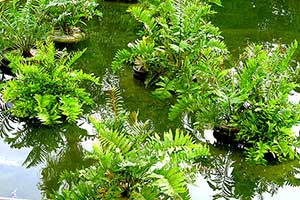
Creating Islands in Aquatic Ecosystems
In most zoological exhibits or gardens, water is utilized as one of the main features or a focal point of the exhibit. This water feature can be an architectural element in the form of a waterfall, pond, or river and it may also be a habitat with fish, water birds, turtles, plants or some type of ecosystem.
Read More >>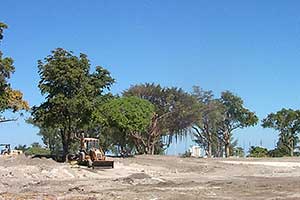
Building a New Jungle - Contouring the Site and Creating a Tree Canopy
Subtle changes in the topography of a site can be advantageous to a theme park or zoo setting for many reasons. First there is the aesthetic benefit. Low rises over which trails pass or vegetation grows will be much more visually interesting than a flat terrain.
Read More >>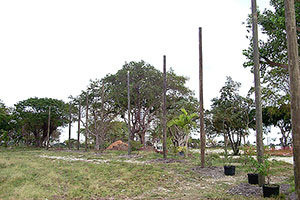
Building a New Jungle - The First Phase
The creation of a lush tropical jungle in two years from a barren semi-tropical site requires the coordination of input from a number of disciplines. Horticulture, Landscape Architecture, Civil Engineering, and Soil Science are a short list of the entities needed for the success of such an undertaking.
Read More >>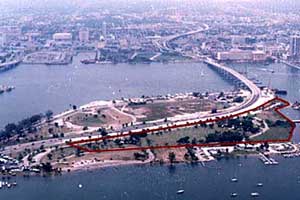
Watson Island - Remaking History
If you ever had the chance to visit the original Parrot Jungle and Gardens (PJG), you were participating in South Florida history. By world standards, the 65 year old zoological park was a youngster.
Read More >>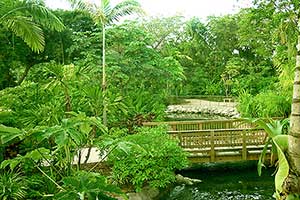
The Gardens at Parrot Jungle Island, The First Year
Parrot Jungle Island had its first year anniversary during the month of June 2004. This was a good time to reflect upon the progress of this “built from scratch” garden and review the means and methods of the horticultural decisions that were made during the two-year process of landscape installation.
Read More >>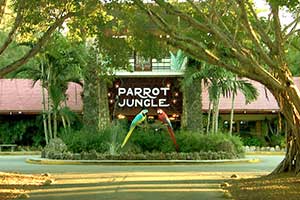
Parrot Jungle fans flock for final look Park's hours to change Sept. 2
The South Florida landmark is preparing for its December closing by changing its schedule to weekend hours beginning Sept. 2. The facility's Watson Island site is expected to be ready in the spring. Story, X.
Read More >>
Parrot Jungle Plans To Spread Its Wings On Watson Island
Sixty-five years ago, a middle-age Austrian immigrant named Franz S. Scherr hacked and dug Parrot Jungle out of a dense, creek-fed subtropical hammock in out-of-the-way South Dade County. The featured attraction was the Scherr family's pet blue-and-gold macaw, Zebra.
Read More >>
Parrot Jungle & Gardens
One of the most luxuriant tropical plant collections in South Florida was Parrot Jungle and Gardens (PJG). Since its opening in 1936, PJG had evolved from a typical roadside tourist attraction with a parrot show and pretty gardens to a South Florida historical icon.
Read More >>