

About Tropical Animals
The tropics of the world contain an amazing wealth of animals, insects, and other non-plant inhabitants. There are animals and insects that at first glance seem very appropriately suited to their habitat and climate, while the successful survival of some organisms with such unimaginable shapes and colors often challenge our logic and common sense. How can some of these gaudy brightly colored creatures move through the forest and remain uneaten? Aposematic coloration that has evolved through Batesian or Muellerian mimicry can be seen throughout the animal kingdom. Camouflage and cryptic coloration is also found in many animal and insect species. Form (and color) does follow function!
There is nothing more rewarding than seeing an animal or insect in its natural habitat. Most of the animals and insects featured on tropicaldesigns.com were photographed in situ or in their native environment. Many of these creatures are endangered through an irrevocable loss of habitat and the only way their species may survive is by the stewardship and husbandry of zoos and theme parks with tropical exhibits and artificial ecosystems. This is an unfortunate fate for any animal but the other choice is extinction. That is not an option to be considered.
The creation of an artificial ecosystem that will allow tropical flora and fauna to not only survive, but flourish is possible. There are zoos and theme parks worldwide that undertake these exhibits successfully. The key to successful and sustainable design is having an intimate knowledge of the natural history of the animal(s) and its associated flora. Transferring that knowledge into the design of the artificial ecosystem/exhibit, and having the long term ability to commit the resources, and a knowledgeable staff to maintain the habitat will enable a successful system for the creatures within to flourish. Remember, a well constructed and visually appealing exhibit is an educational one. The better educated people are, the more likely they are to be concerned with the stewardship of our planet and the preservation of all species.
Jeff Shimonski
June 5, 2005
Photo Gallery
Click Photos to Enlarge
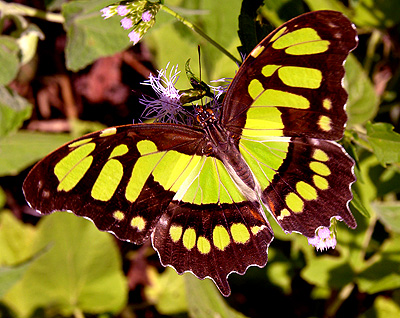 A Malachite butterfly, Siproeta stelenes, at El Parque Chipinque in Monterrey, Mexico
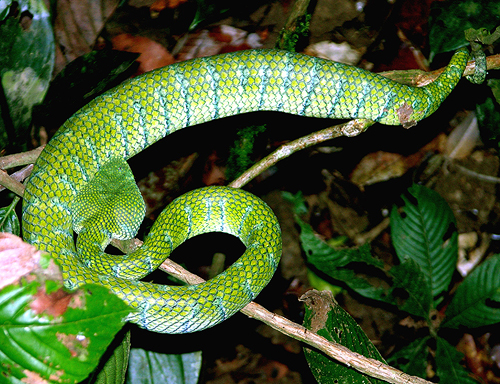 Wagler's Viper, Tropidolaemus wagleri
near Sandakan in Sabah, Malaysia
Wagler's Viper, Tropidolaemus wagleri
near Sandakan in Sabah, Malaysia
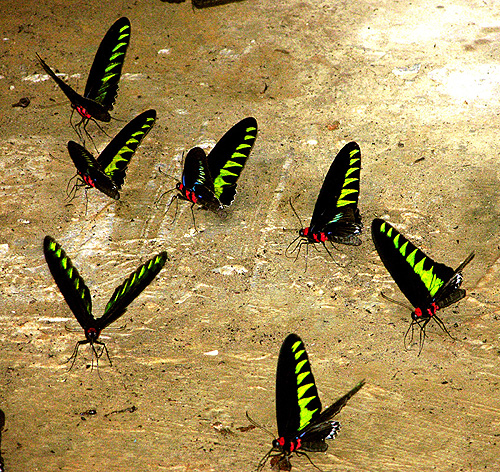 A group of male Rajah Brooke’s birdwing butterflies, Trogonoptera brookiana brookiana from Mulu, Sarawak, Malaysia
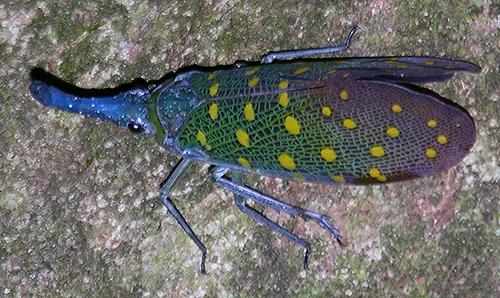 Lantern Bug, Fulgoridae sp. from Kinabalu,
Sabah, Malaysia
Lantern Bug, Fulgoridae sp. from Kinabalu,
Sabah, Malaysia
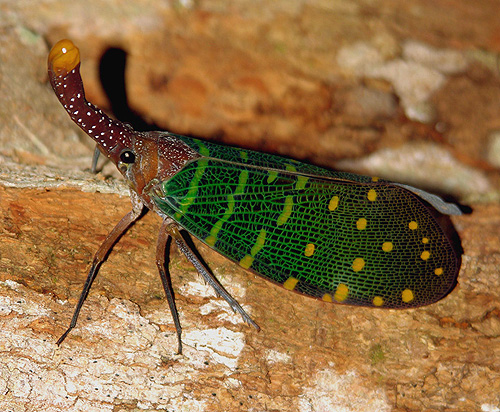 Lantern Bug, Pyrops intricata from Gunung
Gading, Sarawak, Malaysia
Lantern Bug, Pyrops intricata from Gunung
Gading, Sarawak, Malaysia
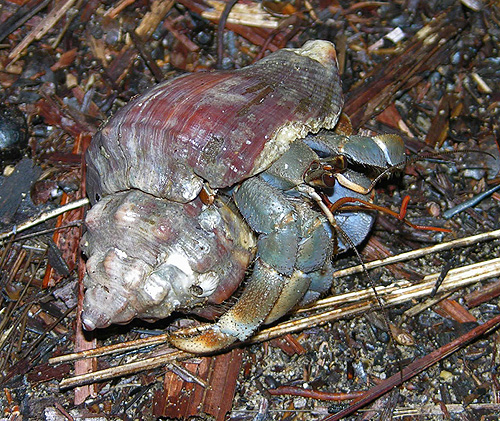 The terrestrial Hermit Crab, Coenobita sp.
from Bako, Sarawak, Malaysia
The terrestrial Hermit Crab, Coenobita sp.
from Bako, Sarawak, Malaysia
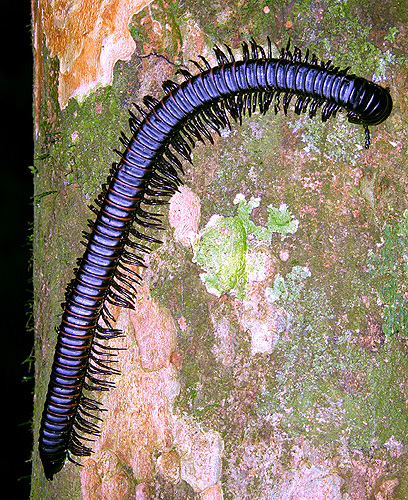 Unidentified Blue Millipede from Gunung
Gading, Sarawak, Malaysia
Unidentified Blue Millipede from Gunung
Gading, Sarawak, Malaysia
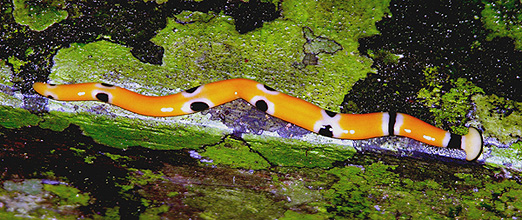 An Aposematic Platyhelminthes flatworm possibly a
Bipalium sp. near Gunung Gading, Sarawak, Malaysia
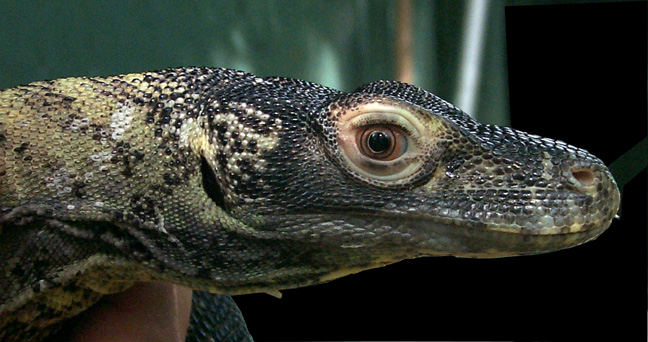
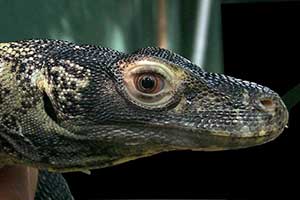
Varanus komodoensis, Komodo Monitor
An Aposematic Platyhelminthes flatworm possibly a
Bipalium sp. near Gunung Gading, Sarawak, Malaysia
Varanus komodoensis, Komodo Monitor
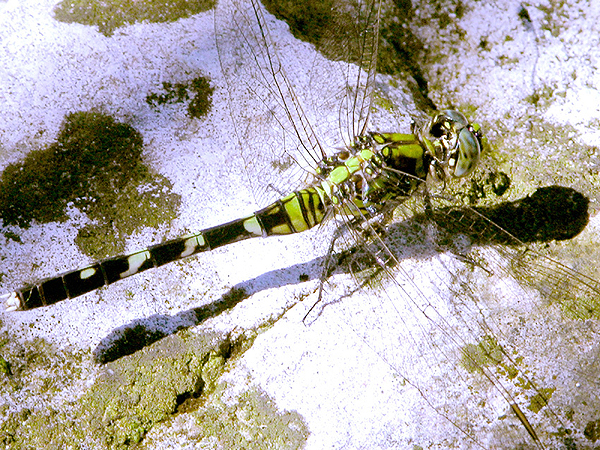 Female Eastern Pondhawk, Erythemis
simplicicollis from Grand Bahama Island
Female Eastern Pondhawk, Erythemis
simplicicollis from Grand Bahama Island
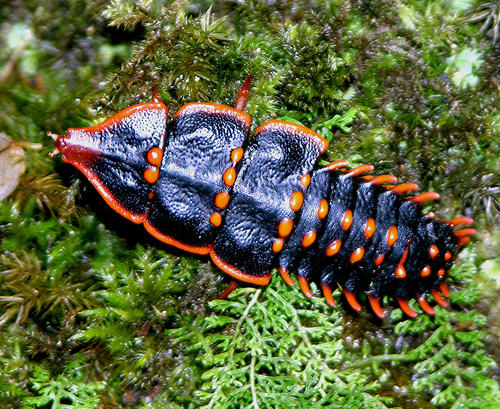 Female Trilobite beetle, Duliticola sp. in Kinabalu Park, Sabah, Malaysia
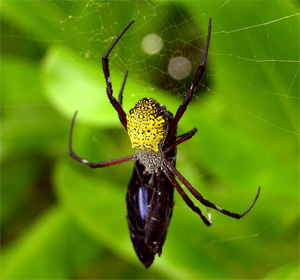 An Argiope appensa spider eating a Common Eggfly Butterfly Hypolimnas bolina caught in its orb web near Inarajan, Guam
 About Tropical Animals
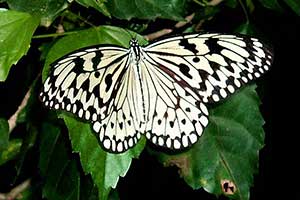 Butterflies in the Garden
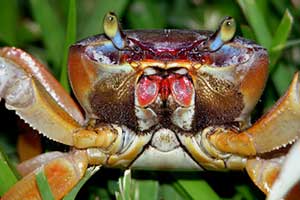 American Blue Land Crab